In a historic Monday night that will be remembered as a turning point in transatlantic relations, Mark Carney’s Liberal Party secured a decisive majority government in Canada. By winning three critical special elections, the Liberals have locked in 174 seats—two more than the 172 required for total control of Parliament. This victory grants Carney an uninterrupted mandate until October 2029, providing him with the legislative “superpower” to execute a radical agenda: the systematic reduction of Canada’s economic reliance on the United States.
The significance of this victory cannot be overstated, especially when viewed alongside simultaneous structural shifts in Europe. As Canada stabilizes its internal leadership, the European Union is moving to eliminate the veto power that has long paralyzed its foreign policy. Together, these two entities are building a “Third Path”—a geopolitical and economic alternative that makes American approval optional rather than mandatory.
The Catalyst: Trump’s “51st State” Rhetoric
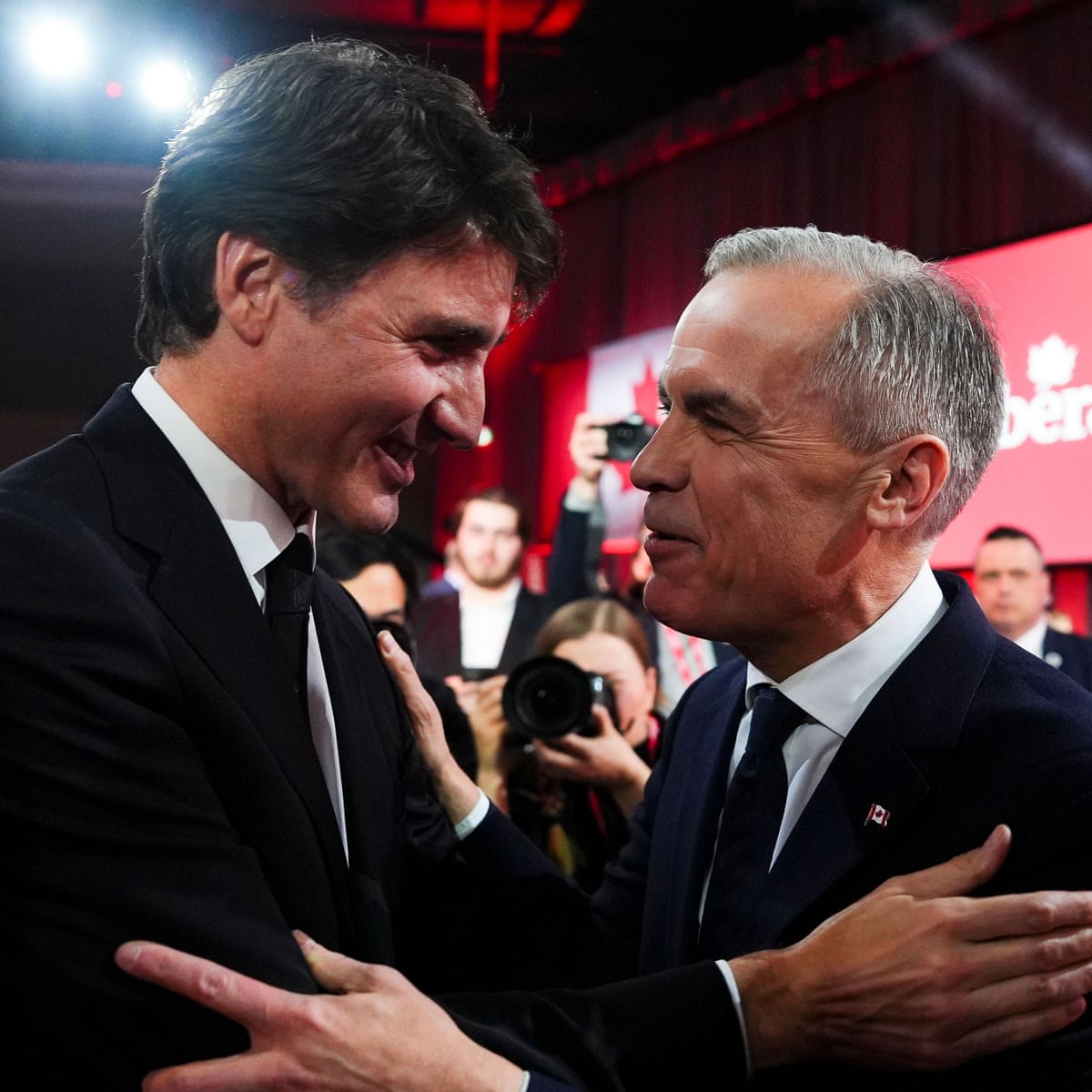
The rally behind Mark Carney was fueled by a profound sense of national urgency. Throughout the second Trump presidency, relations between Ottawa and Washington have deteriorated to levels unseen in modern history. President Trump’s repeated references to Canada as a “51st state,” combined with aggressive annexation threats and the weaponization of trade through heavy tariffs, created a “rally around the flag” effect.
Currently, 67% of Canadian exports are destined for the U.S. market. For years, Washington has used this overwhelming dependence as leverage. However, an Ipsos poll revealed that 53% of Canadians—including many who do not traditionally identify as Liberal—wanted a majority government specifically to build economic independence. As McGill Professor Daniel Béland noted, the threat to Canadian sovereignty under the current U.S. administration has convinced the public that “business as usual” with their southern neighbor is no longer a viable strategy.
Building the “Third Path”: Defense and Energy
With a majority in the House of Commons, Carney no longer needs to negotiate with opposition parties that previously stalled over 50% of government legislation. He is moving with lightning speed to diversify Canada’s global partnerships. A core pillar of this strategy is the total overhaul of defense procurement.
Historically, the U.S. supplied up to 75% of Canadian weapon imports. Under Carney’s new mandate, 70% of military spending is being redirected toward domestic manufacturers and European suppliers. Canada is also spearheading the creation of the “Defense Security and Resilience Bank” alongside the UK—a multilateral institution designed to finance defense supply chains entirely independent of U.S. manufacturers. By increasing the defense budget to 5% of GDP, Canada isn’t just securing its borders; it’s creating 125,000 domestic jobs and positioning itself as a major arms exporter to the European market.
In the energy sector, the decoupling is equally visible. Carney is aggressively pushing Canadian Liquefied Natural Gas (LNG) exports to Japan and Europe. This provides Europe with energy security that isn’t subject to the “tariff whims” or political approval of the White House. By signing strategic partnerships with Japan and trade deals with the UAE, Indonesia, and Ecuador, Canada is proving that its resources have a home far beyond the American border.
The EU-CPTPP Convergence: A 40-Country Super-Bloc
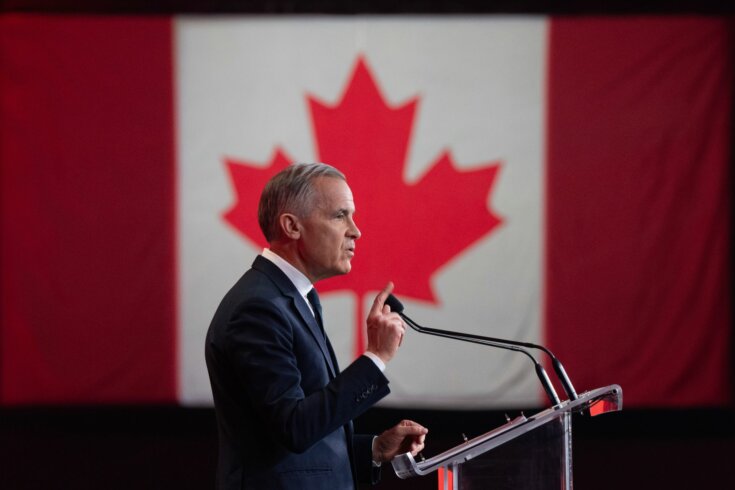
The ultimate structural endgame for Carney and his European allies is the potential convergence between the European Union and the Comprehensive and Progressive Agreement for Trans-Pacific Partnership (CPTPP). This bloc includes Canada, the UK, Mexico, Australia, and Japan, among others.
If these two massive trade frameworks align, it would create a 40-country “super-bloc” with shared rules on tariffs and origins. This entity would represent a genuine alternative to the U.S.-dominated economic architecture. Carney explicitly warned of this “rupture in the world order” during his speech at the World Economic Forum in Davos, urging “middle powers” to combine their strengths rather than competing for the favor of superpowers. His message resonated deeply in Europe, with leaders from Denmark to Mexico praising the vision as a logical and essential evolution.
The China Factor and the Future of Hegemony
Compounding the challenge for Washington is Canada’s pragmatic approach to China. In early 2026, Carney signed a strategic partnership with Beijing that significantly reduced tariffs on Canadian canola, leading to an immediate surge in exports. As both Canada and Europe pursue engagement strategies with China that run counter to U.S. containment efforts, the “warnings” from Washington regarding Chinese economic influence are carrying less and less weight.
The reality is that empires do not always lose influence through military conflict; they often lose it when their closest allies build redundancy. Canada and Europe are currently building that redundancy in real-time. With Carney secured until late 2029 and Europe removing its internal blockers to unified action, the “American Era” of coercion is facing its greatest challenge. Washington’s leverage of “you need us more than we need you” is evaporating, replaced by a global realignment where the U.S. may soon find itself looking in from the outside.